AB Consulting + Nasdaq’s Entrepreneurial Center
In addition to showcasing the remarkable women and resources within our own Sonoma County TLC community, we’re expanding the circle: introducing our members to fellow women founders, leaders and champions of women entrepreneurs from across the Bay Area and beyond.
We believe deeply in the power of expanded circles: creating a wider web of connection, opportunity and impact. These women bring access to valuable expertise, tools, programs and resources – many available at no cost – designed to help us refine, grow and sustain our businesses.
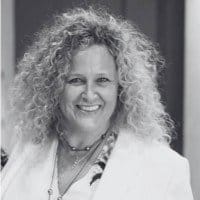
We’re kicking off this interview series and resource toolkit with Allison Berardi of AB Consulting and the Nasdaq Entrepreneurial Center.
Allison is no stranger to TLC. A Marin neighbor who works with many clients in Sonoma County, she has generously shared her expertise with our community through workshops on business planning, strategy and marketing.
An entrepreneur, advisor, workshop leader and ecosystem builder, Allison helps founders and organizations build stronger businesses and communities. Her work spans entrepreneurship, strategic partnerships, executive education, coaching and founder programming, including her work with the Nasdaq Entrepreneurial Center, the nonprofit arm of Nasdaq dedicated to supporting entrepreneurs through education, mentorship, resources and community.
Allison also leads programs for women focused on business growth, leadership and personal development. Drawing on experience across hospitality, retail, wellness and high-growth startups, she brings together smart business strategy and human-centered leadership to help founders grow with intention, thrive and create meaningful impact.
From Entrepreneur to Advisor
TLC: Allison, you’ve spent many years as an entrepreneur, advisor and coach to other entrepreneurs. Take us back to the journey that brought you to where you are today. What have you loved most about working with founders, and how has that experience shaped the programs and resources you offer today?
AB: When I look back at my career, it hasn’t been a traditional or linear path, but there is actually a very clear thread through all of it.
I’ve always been interested in creating environments where people can thrive and helping people and organizations navigate change.
I grew up around entrepreneurship and throughout my career I’ve had the opportunity to build businesses, experiences, communities and programs. My work has taken me across hospitality, wellness retail, real estate, family offices and women’s entrepreneurial communities. And for more than 20 years, I’ve had my own consulting and coaching practice.
That breadth of experience has given me the opportunity to see organizations and the people building them at very different stages of their evolution.
I’ve had the privilege of being there at the very beginning, when founders are coming together around an idea and deciding to build something meaningful that neither of them could create on their own.
I’ve supported founder partnerships as they’ve figured out how to work together, define their roles, build trust and turn a shared vision into something real.
I’ve also been there through growth and expansion, leadership changes, shifts from one business model to another, mergers and acquisitions and sometimes the very difficult decision to close an organization.
So when I look across my career, transition has actually been a constant theme. Sometimes transition is an ending. Sometimes it’s a reinvention. And sometimes it’s the auspicious beginning of something entirely new.
And all of those moments require something similar: the ability to step into uncertainty, understand what’s changing, make thoughtful choices and keep moving forward.
I think one of the roles I’ve played throughout my career is being a supporter and facilitator of change; helping people step back, see what’s possible, and move forward with greater clarity and intention.
And that’s part of why I’ve always been so drawn to founders.
There’s something extraordinary about people who see something that doesn’t exist yet and say, “We’re going to build that.”
But I’ve also had a front-row seat to the reality of entrepreneurship. Behind almost every success story is an enormous amount of uncertainty; the customer who disappears, the investor who says no, the employee who leaves, the cash-flow problem, or simply waking up one morning wondering whether you can keep doing this.
That’s why my work has increasingly become about supporting both the business and the person behind the business.
Sometimes the presenting problem is revenue or strategy or fundraising. But underneath it there may be a question about leadership, confidence, priorities, relationships or simply, “What am I actually trying to create now?”
That intersection between strategy, leadership, transition and the human being navigating all of it is really where I love to work.
And it has shaped everything I’m doing today: from my private advisory work and the Soothe Program to the work I’m now doing at the Nasdaq Entrepreneurial Center.
Building Community & Partnership
TLC: You’ve been a friend and partner to TLC, and we’ve been fortunate to bring valuable resources to our community through that relationship. What has that partnership meant to you, and what have you enjoyed most about working with our community of entrepreneurs?
AB: I’ve had the benefit of experiencing TLC from a few different perspectives. I’ve attended events, I’ve had the opportunity to teach business workshops for the community, and I’ve also had the benefit of hearing from Erin Hunt Moore, TLC’s founder, about what she and her advisors are building and why this community matters.
Every interaction I’ve had has reinforced for me how special the community is and how important this kind of organization is for women founders.
Entrepreneurship can be incredibly lonely. You can be surrounded by employees, customers, investors and family and still feel like you’re carrying the entire business on your shoulders.
Community changes that.
From what I’ve experienced at TLC and from what I hear from Erin, there’s a real intention around creating a place where women entrepreneurs can find not only information and resources, but relationships, encouragement and other women who understand what it actually means to build something. That’s very aligned with how I’ve approached my own work throughout my career.
I love connecting people. I love thinking, “You need to know this person,” or “There’s a resource you don’t know exists,” or “Someone else has already navigated the problem you’re wrestling with.”
I think the best entrepreneurial ecosystems work that way. They give founders access to knowledge and opportunity, certainly, but they also surround them with people who can offer perspective, expertise and support and remind them that they don’t have to figure everything out alone.
That’s what I think is so important about the community Erin and her advisors have created at TLC, particularly for women founders.
A New Chapter at Nasdaq
TLC: This year, you’ve stepped into a new role with the Nasdaq Entrepreneurial Center, which feels like a natural extension of your work supporting entrepreneurs. Tell us about what you’re doing there and how this next chapter is expanding your ability to support small-business owners and founders.
AB: It really has been a natural evolution.
I’m on the Programs Team at the Nasdaq Entrepreneurial Center, and what’s exciting to me is that I’m now able to do work I’ve been doing throughout my career, but at a completely different scale.
I work closely with our Milestone Makers, High Growth founders and my work also extends across our broader programming. I’m involved in developing programs, working directly with founders, identifying and cultivating speakers and subject-matter experts, supporting sponsors and partners and helping bring really exceptional people into conversations with entrepreneurs.
And the range is incredible.
One week I might be working with a founder trying to secure a major customer. Another day I’m helping develop a conversation around fundraising, sales, AI, marketing, financial management, storytelling or scaling.
So I’m supporting founders, but I’m also constantly learning myself, which I love.
One of my favorite parts of the work is Milestone Makers, a program for global high-growth founders.
The premise is beautifully simple: instead of trying to fix or grow everything in your business at once, each founder identifies one meaningful, measurable milestone and focuses on achieving it over a three-month period.
Then we surround that founder with coaching, mentorship, subject-matter expertise, peer accountability and community.
I’ve seen how powerful that can be.
When founders get clarity about what actually matters, progress becomes measurable, confidence grows and momentum builds.
And that’s probably the most exciting part of this chapter for me: helping founders at scale while still keeping the work deeply human.
Making the Entrepreneurial Center Accessible
TLC: The Nasdaq Entrepreneurial Center may be new to many people in our community. What is the Center’s mission, and what kinds of tools, programs, and resources can entrepreneurs and small-business owners access through it?
AB: The Nasdaq Entrepreneurial Center is a nonprofit dedicated to supporting entrepreneurs with education, resources, mentorship and community.
And one of the things that surprises people is how much of what we offer is completely free.
Every month we offer classes and conversations with experts around the things entrepreneurs are actually dealing with: sales, fundraising, marketing, AI, financial management, storytelling, business models, leadership, partnerships, exits and so much more.
We also have deeper programs like Milestone Makers for high-growth founders, along with programming that supports small and medium-sized businesses through mentorship, learning and community.
What I’m particularly proud of is the caliber of people we’re able to put in front of founders.
I spend a lot of my time finding and developing relationships with extraordinary experts: people who have built companies, invested in them, advised them and actually lived through the challenges our founders are facing.
And I think that’s important because founders don’t just need theory. They need access to people who understand the reality of building a business.
So whether you’re just starting out, running a small business, building a venture-scale company or thinking about an eventual exit, there’s probably something at the Center that can help you.
These resources are for you.
Resources for Women Founders
TLC: Your work with the Entrepreneurial Center has inspired us to create a new resource portal for our community, bringing together free or widely accessible tools and resources specifically for women founders and entrepreneurs. What do you think founders need most right now when it comes to growth, strategy, scaling, and building sustainable businesses, and how can resources like those offered by the Center help?
AB: I actually don’t think founders have an information problem anymore.
I think we have an attention problem.
There’s an overwhelming amount of information available. Every founder is being told she needs to raise money, use AI, build a personal brand, create content, grow revenue, understand her data, hire a team, automate, network – and somehow do all of it immediately.
You can’t. So what founders need most right now is clarity, focus, trusted expertise and access. And for women founders especially, access matters.
Access to sophisticated financial knowledge. Access to investors. Access to people who really understand sales. Access to technology and AI expertise. Access to mentors who have actually built companies. And access to networks they might not naturally be part of.
But even access isn’t enough if you’re overwhelmed by 500 resources.
That’s why I love the idea of TLC creating broader access to its community. Curation is incredibly valuable.
A founder should be able to say, “Here’s where my business is today. Here’s the milestone I’m trying to reach. What are the three things that could actually help me?”
That’s very different from giving someone another list of 100 things she should be doing. The goal isn’t to consume more information: it’s to find the right information at the right moment and turn it into action.
Finishing the Year Strong
TLC: As we head into the fourth quarter, founders are often balancing a lot: finishing the current year strong while also thinking ahead to what’s next. What are three to five areas you recommend entrepreneurs focus on now to close out the year successfully and set themselves up for a strong start to the new year?
AB: I would focus on five things.
First, know your numbers.
Before you plan next year, understand this year. Where did your revenue actually come from? What was profitable? What wasn’t? Where did you spend time and money that didn’t produce a meaningful return?
Second, identify the one milestone that matters most between now and year-end. Not ten things. One consequential thing.
Ask yourself: “If I accomplished this by December 31, would it meaningfully change how I enter next year?”
Third, look at your relationships. Who really mattered to your business this year? Customers, employees, partners, mentors, investors, advocates. Before you’re constantly looking for the next person or opportunity, nurture the relationships you already have.
Fourth, look at your data, and listen to what it’s telling you. And I don’t mean only financial data. What are your customers actually telling you? What are they buying? Where are they disengaging? What worked this year that you should do more of? And what did you keep doing simply because it was in the original plan?
And fifth, establish your first 12-week milestone for next year. I love thinking in 12-week increments because a year can feel abstract and overwhelming. Twelve weeks creates urgency and focus.
You don’t need to know everything you’re going to accomplish next year. You just need to know what you’re going to do next.
Getting Grounded for the Year Ahead
TLC: The final months of the year can be especially busy for small business owners, particularly as we move toward the holiday season. What are some of your own best practices for helping founders pause, get grounded, reflect on what they’ve accomplished, and create a clear vision for the year ahead?
AB: This question is very close to my heart because it’s really at the foundation of my Soothe program, the leadership and personal development work I’ve created outside of Nasdaq.
Soothe isn’t only for founders. Many of the women who come to Soothe are in some kind of transition. They may be moving from one professional chapter to another, navigating a family transition, dealing with a diagnosis or another significant life change, or simply reaching a point where they know the way they’ve been living or working isn’t necessarily the way they want to move forward.
And in many ways, that connects directly to what I’ve seen throughout my professional life.
Businesses go through transitions. Founders go through transitions. And our lives go through transitions. Whether it’s a company changing its business model, an organization navigating a merger, a founder becoming a different kind of leader, or a woman finding herself at the beginning of a completely new chapter, there’s often a very similar question underneath it:
What’s next, and how do I want to enter that next chapter? We’re all very good at moving the goalpost. We accomplish something we’ve worked toward for six months, celebrate for about five minutes, and immediately start thinking about what’s next. And when we’re in transition, I think there’s even more pressure to quickly figure out the answer.
But there’s enormous value in actually stopping.
I encourage people to ask: What happened this year? What am I proud of? What surprised me? What was difficult? What did I learn? What gave me energy? What depleted me? And perhaps most importantly, what am I ready to leave behind?
And then, before you make the strategic plan or decide exactly what comes next, I think you need to create space for vision.
Ask yourself: What do I actually want? Not just: What revenue number do I want? Or what should my next job or business be?
What do I want my life to look like? What kind of leader, or person, do I want to be in this next chapter? What do I want my days to feel like? Who do I want around me? What am I ready to make room for?
Sometimes the transition itself is where some of the most important work happens. That’s why I talk so much about getting above the business, and sometimes getting above the immediate circumstances of our lives. We have to step out of the constant doing long enough to see where we’re actually going. Then we can come back down and turn that vision into choices, strategy, milestones and action.
Reflection is what allows us to move forward with intention.
One Piece of Advice
TLC: Finally, if you could give one piece of advice to a woman entrepreneur who is feeling overwhelmed by everything on her plate right now, what would you want her to hear?
AB: I would tell her:
Overwhelm happens when 25 things are competing for first place. So get them out of your head. Put them on paper and ask yourself:
“What is the one thing I can move forward right now that would make several of these other things easier?”
Start there. And then ask for help. I think women in particular can become incredibly capable at carrying enormous amounts of responsibility. But being able to carry everything doesn’t mean we should.
After more than 20 years working with entrepreneurs, I’ve learned that the strongest founders aren’t necessarily the ones who know everything or do everything themselves. They’re the people who learn to build an ecosystem around themselves. They ask good questions. They find mentors. They cultivate relationships. They use the resources available to them. And importantly, they let other people contribute.
I think entrepreneurship is a little like a treasure hunt. Some days you find gold. Some days you don’t. But the conversation that didn’t lead anywhere, the investor who said no, the idea that failed, the person you met unexpectedly, they can all become clues.
So when you’re overwhelmed, you don’t need to figure out the entire map. Find the next clue. Take the next meaningful step. And keep going!
0 Comments